

Within the angling community, there’s a stark rivalry between two main types of fisherman. There are the “purists”, who only allow themselves to fish with flies and lures. Then there’s the bait fishers, who swear by bait and nothing else. Most anglers probably fall somewhere in the middle of these two extremes. But the fact is, for Trout Fishing in Colorado, bait fishing lands more fish. It still takes no small amount of skill to pull off successfully, though. In this article, we’re going to take a look at Trout Rigs for bait fishing. We’ll show you everything you need to know so you can be prepared for your next fishing trip in Colorado!
Among bait fishermen is a debate between two popular rigging methods. This debate centers around where you should place your weight. We’re going to look at these two methods. In addition, we’ll look at a third alternative. While more time-intensive, this rig could prove the difference between landing a Trophy Mackinaw and having him slip through your fingers.
The first method we’ll look at is placing your weight about two feet above your line. You do this either on a leader line with a swivel or a sliding rig on the line itself. This is the more classic rigging method, and its strength lies in its simplicity. The bait is presented first in this rig and all you have to do is simply wait for the trout to stumble across the bait. It’s low maintenance and versatile in its range of depth, making this a solid option for any bait fisherman.
Our next method’s strength lies in waters with lots of vegetation. For this rig, you’ll want to place the weight right at the end of the line. You’ll rig the hooks higher up on your line to compensate. This rig provides a unique advantage when fishing near vegetation (a common hotspot for trout). With this method, you want your weight to end up on the bottom of the lake. This allows the bait to be suspended above the vegetation and in the trout’s line of sight. For denser ground, this may be the rig for you.
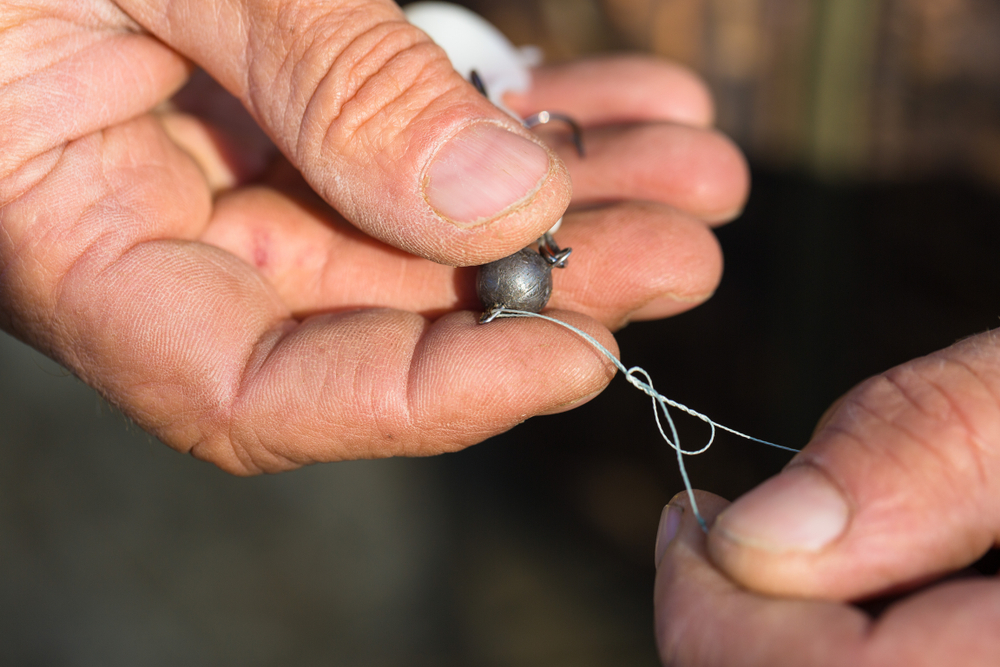
Finally, we’re going to take a look at a method that requires a lot of time, but is well worth the effort. For this rig, you’re going to need a snap swivel, a barrel swivel, a bell weight, and leader, along with the standard two hooks. The setup begins with the bell weight on the line, followed by the snap swivel which is then connected to the barrel swivel. After that you’ll attach your leader, and then finally your hooks.
What makes this setup work so well is how it allows the line to rotate smoothly through the swivel, which makes it so there’s some drag when you get a hit. This gives you far more control over your reel and rod and greatly reduces the chance of breakage, allowing you to tire the fish out in a controlled manner. Perfect for big fights, if you have the time and patience, this rig might be just what you’re looking for!
Ultimately, each rig has its own pros and cons, as well as its own diehard supporters. The important thing is to figure out which rig works best for you! These are three approaches you can try, but feel free to experiment with these three, try other rigs, and see what brings you success.
So get out there, rig up, and cast out into the beautiful rivers and lakes of Colorado!


Get instant access to our top 3 tips for baiting your trout straight to your inbox.