

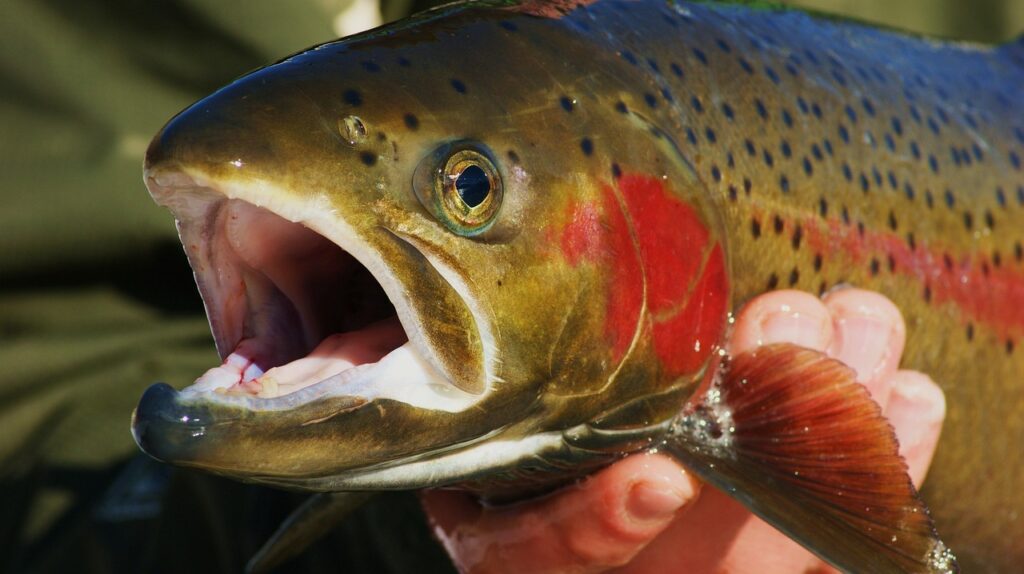



Colorado is teeming with beautiful waters filled with amazing trout. From the Colorado River to Granby Dam, there’s loads of opportunities to come home with plenty of fish on your stringer. One of the best ways in Colorado to catch fish is by Fly Fishing. There’s 2 different techniques for fly fishing, the classic flyrods and spinning rods. Today, we’re going to take a look at how to fly fish with spinning rods. We’re going to take a look at the best times, places, and techniques for using the spinning rod. And most of all, we’ll help you see how, once you’re ready, fly fishing Colorado is sure to be an experience you’ll never forget.
Within the fly fishing Colorado community, a debate emerges among fly fishing “purists” who prefer to only use the flyrod and those who are happy to use spinning rods. Each has its own benefits and drawbacks. While flyrods are undoubtedly superior on rivers, lake flyfishing provides unique advantages to the spinning rod. Equipped with a bubble and a fly, spinning rods provide opportunities to cast deeper into the water and catch more fish. You don’t get the same natural motion or specialized fly line as you would with a flyrod. But in the lake, spinning rods may just be your best bet. But don’t count out spinning rods from rivers, either. We’ll look at a few places and techniques where fly fishing Colorado with a spinning rod will be fruitful in its own right.
There’s plenty of places to explore when fly fishing Colorado. We’ll list off some of the best lakes and streams for you to explore:
We go over many of these locations in our places to fish in Colorado articles. You can find more about these lakes here and rivers here.
Snelling the fly is vital to making sure the knots are good and secure. You can typically buy pre-snelled flies, but in case you can’t, use an improved clench knot or a trilene knot. For a guide on snelling the fly, look here.
Once the fly is snelled, tying the flies onto your line is a very particular art. One of the most tried and true methods to do so is using a Blood Dropper Knot. These guys won’t weaken your line at the point of the knot and will ensure your flies stay attached and bring home the big lunker trout. A guide to tying these knots can be found here.
Fly fishing with a spinning rod isn’t quite as intuitive to rig as a flyrod, but we’ll show you 2 different techniques you can use to attach the bubble and fly. The first is the classic method. You’ll place the fly at the terminal end of the line and attach a bubble about 3 feet above the fly on the line.
The second is to attach the bubble at the terminal end of the line and attach the fly about 3 feet above, swapping the positions from the classic method. This one tends to be a more productive method. The bubble disturbs the fish less as the fly is reeled in first, leading to less spooking of the trout.
The key to fly fishing on the lake is to cast as far as you can into the water and then to reel in incredibly slowly. Patience is the greatest virtue of the fly fisherman. Slow reeling will attract trout, even if not right away, and you’ll be sure to bring some home. One idea is to place the rod between your index finger and thumb to feel for even the smallest strikes.
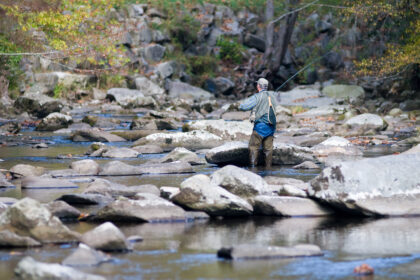
If you end up fishing a river with the spinning rod, a good technique is to rig the line with the bubble at the terminal end and cast upstream. Try to look for the part of the river with the most turbulence, keeping the line tight but not reeling any faster than that. Try using Silver Zonkers or #6 Black Wooleys. These parts of the river are often underfished when in reality they can be filled with many large trout.
We’ve covered several different tips, tricks, and strategies in this article on fly fishing Colorado. Now you know where to go, what to use, and how to cast it, so you can be sure that you’re prepared with plenty of lunkers on your stringer. So pack your tackle, get out there, explore the beautiful waters of Colorado, and be ready for the massive trout that will be heading your way.
Get instant access to our top 3 tips for baiting your trout straight to your inbox.